About Dr. Edward Kurjack
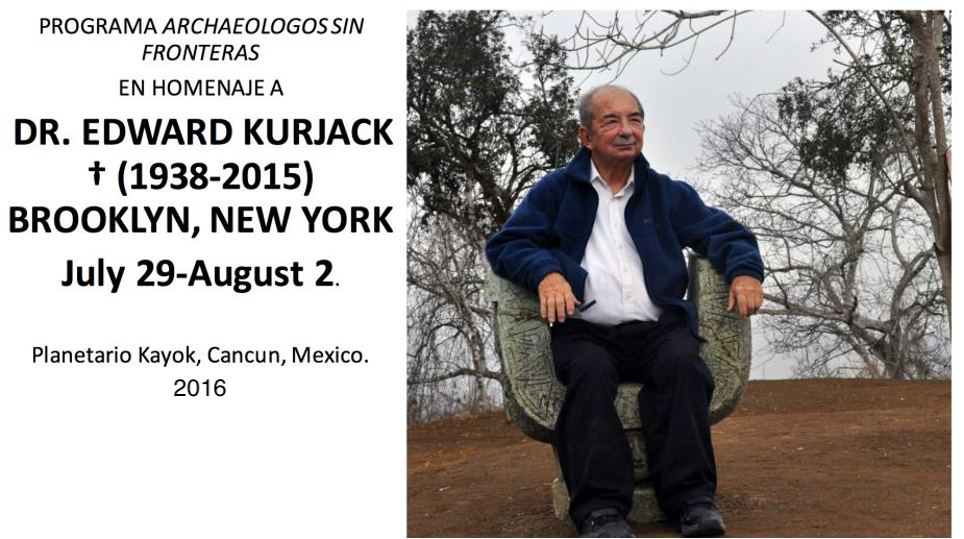
El Archivo del Profesor Edward B. Kurjack en el Centro del Patrimonio Maya rinde homenaje a la vida y el legado de Edward B. Kurjack, una figura pionera en la arqueología maya cuyo trabajo contribuyó a dar a conocer el antiguo mundo maya a nivel mundial.
Edward B. Kurjack vivió en Brooklyn, Nueva York, desde 1938 hasta 2015, pero su hogar intelectual y emocional estaba profundamente arraigado en la Península de Yucatán y el mundo maya en general. Considerado uno de los primeros exploradores y eruditos que dedicaron su vida al estudio de la civilización maya, Kurjack es ampliamente reconocido como una de las figuras fundamentales de la arqueología maya moderna. Su investigación, docencia y trabajo de campo iluminaron la historia, la cultura y los paisajes mayas en una época en que gran parte de la región permanecía poco estudiada.
Más allá de sus contribuciones académicas, Edward Kurjack era conocido por su humanidad. Forjó amistades duraderas con arqueólogos, miembros de la comunidad y colaboradores en toda la Península de Yucatán, construyendo relaciones basadas en el respeto mutuo, la generosidad y una pasión compartida. Hasta el día de hoy, muchos yucatecos lo recuerdan con profundo afecto, honrando su memoria y el cuidado con el que trataba tanto a las personas como al lugar.
En los últimos años de su vida, Edward Kurjack confió a la Dra. Lilia Lizama un extraordinario conjunto de obras recopiladas a lo largo de décadas. Estas incluyen documentos, fotografías, correspondencia, películas, materiales didácticos, archivos personales y extensos registros de investigación. Estas referencias son fundamentales para la documentación histórica y precolonial. En conjunto, estos materiales conforman la base del Archivo Edward B. Kurjack, una colección en constante evolución que refleja una vida dedicada al mundo maya.
El Centro del Patrimonio Maya se ha comprometido a preservar y compartir estos archivos íntegramente en línea. Al no existir una ubicación física que garantice su preservación a largo plazo, la gestión digital permite que la colección permanezca accesible, sólida y disponible para futuras generaciones de académicos, educadores, estudiantes y miembros de la comunidad en todo el mundo. En este espacio digital, la obra de Edward Kurjack no solo se salvaguarda, sino que cobra nueva vida.
Los Archivos Edward B. Kurjack son un proyecto vivo. A medida que los materiales se organizan, digitalizan y comparten, la colección adquiere mayor significado. Aunque sutil, el apoyo de la comunidad es esencial para garantizar el cuidado, el mantenimiento y la longevidad de este archivo. Las contribuciones ayudan a sostener la infraestructura digital y el trabajo de archivo que preservan el legado de Edward Kurjack. Invitamos a sus colegas a donar más de su obra u otras obras que pueden compartir a estos archivos.
Estos archivos son un homenaje a un gran hombre y un querido amigo, quien dedicó su vida a comprender, honrar y compartir el mundo maya, y constituyen un recurso perdurable para todos aquellos que buscan aprender de él.
Beyond his scholarly contributions, Edward Kurjack was known for his humanity. He formed enduring friendships with archaeologists, community members, and collaborators throughout the Yucatán Peninsula, building relationships grounded in mutual respect, generosity, and shared passion. To this day, he is remembered with deep affection by many Yucatecs, who continue to honor his memory and the care with which he approached both people and place.
In the final years of his life, Edward Kurjack entrusted Dr. Lilia Lizama with a remarkable body of work gathered over decades. These include documents, photographs, correspondence, films, teaching materials, personal files, and extensive research records. These references matter to the historical and precolonial documentation of history. Together, these materials form the foundation of the Edward B. Kurjack Archives—an evolving collection that reflects a lifetime devoted to the Maya world.
The Maya Heritage Center has committed to preserving and sharing these archives entirely online. Without a single physical location capable of guaranteeing their long-term preservation, digital stewardship allows the collection to remain accessible, resilient, and available to future generations of scholars, educators, students, and community members worldwide. In this digital space, Edward Kurjack’s work is not only safeguarded—it is brought back to life.
The Edward B. Kurjack Archives are a living project. As materials continue to be organized, digitized, and shared, the collection deepens in meaning. Subtle as it may be, community support is essential to ensuring the care, maintenance, and longevity of this archive. Contributions help sustain the digital infrastructure and archival work that sustain Edward Kurjack’s legacy. We invite his colleagues to donate more of his work or other works he shared to these archives.
These archives stand as a tribute to a great man and a dear friend, one who devoted his life to understanding, honoring, and sharing the Maya world—and as a lasting resource for all who seek to learn from it.
Metadata
EBK-001234
Title: Temple / Structure ___
Creator: Edward B. Kurjack
Date: ca. 1970s
Place: Dzibilchaltún, Yucatán, Mexico
Collection: Edward B. Kurjack Collection
Series: Archaeological Documentation
Format: 35mm color slide / photographic print / negative
Description: Dzibilchaltún: Archaeology, Landscape, and the Long History of a Maya Place
Dzibilchaltún is one of the most important archaeological landscapes in northern Yucatán, a place whose history spans many centuries of Maya life. Located near the present-day city of Mérida, the site preserves evidence of a long-lived settlement whose inhabitants transformed, occupied, and continually adapted to the surrounding landscape.
The archaeological remains of Dzibilchaltún include monumental architecture, residential areas, plazas, causeways, platforms, water features, and other elements that together provide evidence of a complex and changing urban landscape. Among its best-known structures is the Temple of the Seven Dolls, associated with astronomical alignments that have contributed to the site’s significance in both archaeological research and public understanding of Maya architecture and calendrical knowledge.
The Edward B. Kurjack Collection offers a valuable visual record of Dzibilchaltún as documented through archaeological research and fieldwork. Kurjack’s photographs form part of a broader body of archaeological documentation that allows researchers and the public to examine architecture, landscape, excavation, conservation, and the changing conditions of the archaeological site.
Rather than presenting Dzibilchaltún only as an archaeological monument, the Maya Heritage Center approaches the collection as documentation of a living cultural landscape. The photographs invite questions about how archaeological sites are recorded, interpreted, conserved, studied, and experienced over time. They also provide an opportunity to consider the relationship between archaeological research and the contemporary Maya communities and landscapes surrounding these places.
The photographs in this collection should therefore be understood as primary archival sources and historical images. Their value extends beyond what is visible in an individual frame: together, they can help researchers investigate changes in archaeological interpretation, conservation practices, vegetation, infrastructure, tourism, landscape use, and the visual documentation of Maya heritage.
Through the preservation and responsible digital access of the Edward B. Kurjack Collection, Maya Heritage Center seeks to make this historical documentation available for scholarship, education, and public engagement while recognizing that Dzibilchaltún is not simply a remnant of the past. It remains part of Yucatán’s cultural landscape and the broader living Maya world.
Collection: Edward B. Kurjack Collection
Subject: Dzibilchaltún Archaeological Site
Region: Northern Yucatán, Mexico
Material type: Archaeological photographs and related archival documentation
Archival purpose: Research, education, preservation, and responsible public access
Original caption: [if present]
Source: Edward B. Kurjack personal research archive
Rights: [rights status]
Digital surrogate: [high-resolution master]
Public derivative: [web image]
Related publications: [links]
Related archaeological site: [authority record]
Keywords: Maya archaeology; settlement; architecture; Yucatán; Dzibilchaltún